
The value of peer development extends far beyond its place on an academic CV. This year’s EMCR Peer Development Awards sought to recognise those who see supporting the excellence of others as part of their own ambition, understanding that true impact is rarely achieved alone. Every nominee demonstrated an inspiring commitment to supporting the development of fellow EMCRs, and the panel was incredibly impressed with the training and development taking place across the University for and by our research community.
Among a particularly strong field, this year’s winners stood out for approaches that were practical, generous and capable of creating impact well beyond a single workshop or program. The Researcher Development Unit is pleased to announce the winners of the inaugural awards and their approach to the development of their peers, which creates a vibrant and self-sustaining research community across the University.
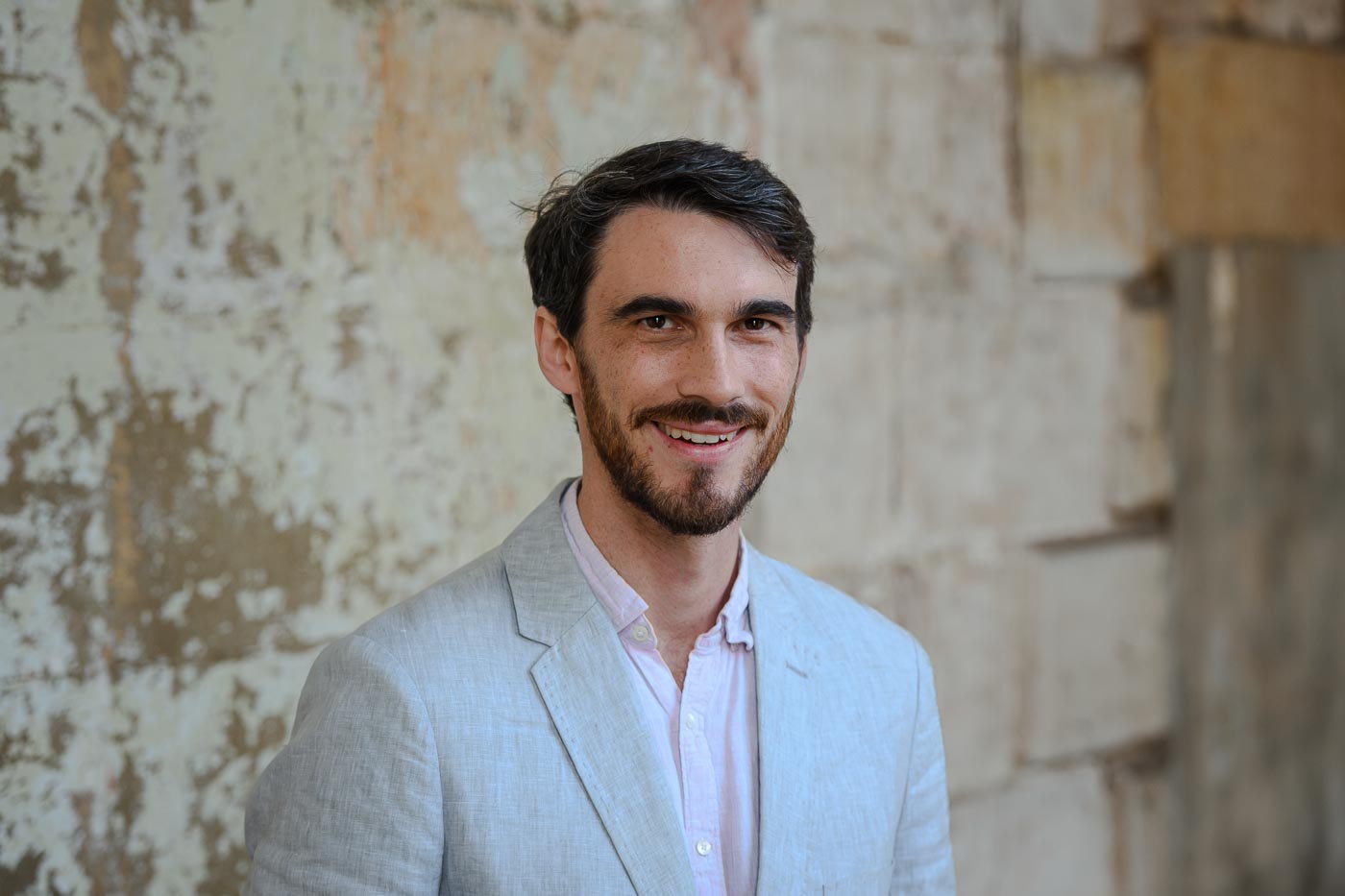
Leadership in Researcher Development: Dr David Waddington
Upon identifying that fellow EMCRs at the Image X Institute, where Dr David Waddington is an NHMRC Emerging Leadership Fellow, needed to develop strategic career skills alongside their technical research capability, he created a program of workshops where they could develop them. With sessions including power and influence in academia, decision making, effective feedback, and another on the Academic Excellence Framework (AEF), Dr Waddington is responding to the needs of fellow early-to-mid career researchers around him when coming up with topics for professional development - and his own. “The things I choose to work on are generally things that I’m working through myself at the time,” he says.
“The Power and Influence in Academia workshop, for example, came out of a long process of thinking about mentorship, sponsorship and influence, and observing how certain decisions take place within the University. We operate in an environment that aspires to make decisions based on merit. But one of the things I realised was that if someone understands who you are, what you do and why what you do matters, it becomes much easier for them to see the merit in what you do.”
To effectively give the kind of insight that professional development requires, Dr Waddington spends a lot of time developing his own skills. He often attends workshops across the University, including from the Researcher Development Unit, and develops material from the knowledge gained. “The topics are usually things I’ve been wrestling with for a while and have finally reached a point where I feel I understand them,” he says.
“The most recent workshop I ran was on coaching and feedback. That came out of recognising limitations in the way I had been providing coaching and feedback, working on improving that myself, and then sharing those learnings once I felt I’d made progress.”
Being committed to his and his team’s capacity is the foundation of Dr Waddington’s involvement in the development of his peers. His quest to become a better researcher involves an investment in the skills required to make that happen, and then transferring those skills to others.
“Learning something that improves my own capacity by a few per cent is valuable, but I’ve come to realise that enhancing the capacity of the people around me can achieve much more significant things and allow everyone to grow,” he says.
When it comes to researcher development, I care about doing great science. But if I want to do great science, at some level it isn’t actually about understanding the equations better. It’s about creating an environment in which a team can thrive.
“That’s really how I approach researcher development: through a capacity lens. If we can build everyone’s capacity, we can grow the pie and everyone wins.”
Dr Waddington treats the workshops he delivers as an offering to his audience, and he tries to ensure they will leave with something they can apply to their practice. Facilitation, he says, is important. It often includes a presentation that encourages discussion, breakout groups, group feedback with whiteboards or butcher’s paper, and practical steps they can walk away with.
“The two questions I really keep in mind are: what do I want people to take away, and is what I’m offering going to trigger conversations?” he reflects. “If you get that right, the discussion tends to take care of itself.”
Innovative Peer Training Design: Dr Priya Vaughan
For innovative training design, Dr Priya Vaughan stood out for her practical arts-based knowledge translation workshop, helping researchers to explore creative ways to communicate their work beyond traditional academic outputs. The workshop included a dedicated workbook, live polling, group discussion and individual planning activities to tailor the session to participants from different disciplines with their own knowledge translation plan. Dr Vaughan has since continued to mentor participants and has joined three new EMCR-led projects that grew from the workshop. She continues to offer co-design and consumer engagement training, translational research workshops and regular peer-support activities.
Dr Vaughan’s interest in arts-based research translation stemmed from her postdoctoral role at the Black Dog Institute, where she looked at creative engagement as a way to support mental health. She soon saw that the same principles could be applied to research communication.
"In research, we have a strong responsibility to share our research and our findings so they can help people,” she says. “That’s ultimately the goal. But I was working with wonderful community members who would never necessarily want to read one of my journal articles. Journal articles are a very unusual genre: they’re technically dense and often behind a paywall. So I started thinking about creative ways we could share what we had learned through visual techniques, art and other approaches.”
Dr Vaughan has developed her training at the Australian Research Council Life Course Centre, which has a strong EMCR development program for researchers working to address social disadvantage. The organisation surveyed its community for their development needs and landed at research translation as a main priority.
“I was reflecting on some of the work I had done in my previous role,” says Dr Vaughan. “We had developed an art exhibition in a community library, and the response had been amazing because it was such a different way of sharing knowledge and research findings. We reached people in the community, local council and other groups who sit outside the usual audience for journal articles and conference presentations. So I started thinking about what I wished I had known when I first began exploring more creative approaches to sharing research knowledge. From there, I developed what I hoped would be a very hands-on, practical workshop.”
Participant involvement and engagement was central to the training design. Dr Vaughan invited participants to bring a project they are working on and to consider the audience and how they might best receive that information. “My own learning preference is very much learning by doing, so I try to make it as interactive as possible — much more like a workshop than a lecture,” she says. “I also want it to be as tailored as possible.
I ask the people attending: where are you coming from? What do you need? Tell me about your project. Then I could adapt the content in real time and shape the more didactic parts of the workshop around what would actually help them.
By creating space for participants to share their expertise, Dr Vaughan insists that the researchers add their own unique contribution to the training itself. “We would share some information, ask people to think about how they could apply it to their own work, and then open the discussion up to the wider group,” she says. “That allowed us to draw on the collective brains trust in the room.”
Such an approach allows deeper connection and even collaborations between members to take shape, which is evident from the results of Dr Vaughan’s workshops. “The participants have become colleagues,” she says. "We can now work alongside each other and co-learn from one another, which has been a lovely evolution.”
Aside from “getting over the uncomfortable silence in the room,” Dr Vaughan’s advice to researchers is to bring the participants into focus. “Embrace the knowledge base you already have in the room through the people you’re supporting, mentoring or teaching,” she says.
“People bring so much different information and knowledge, and one of the best things you can do is invite them to share and reflect. I also think it’s important to give people opportunities to concretely apply what they’ve learned. It might simply be taking two minutes to write something down or work through a short hypothetical scenario. Those activities are incredibly valuable because they build people’s confidence to apply the ideas in their own work. They also consolidate what you’ve been teaching so that the ideas don’t simply disappear from people’s minds as soon as they leave the room.”
Above, Dr Priya Vaughan leads a workshop at the Life Course Centre. In the header, Dr David Waddington facilitates a workshop at the Image X Institute
50
automatic
LinkEMCR Community Impact: Charles Perkins Centre EMCR Committee
Every EMCR committee deserves the support of the wider University community. For Community Impact, this year’s award went to the Charles Perkins Centre (CPC), who have built an enduring, peer-led community that connects researchers across disciplines and provides tangible development opportunities and funding. Through its symposium, seminar series, skills and career workshops, welcome events and funding schemes, it has created regular opportunities for researchers to build confidence, develop skills, form networks and progress their work.
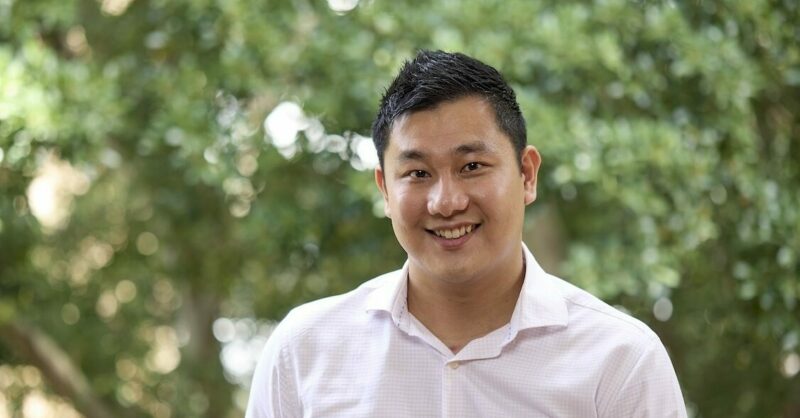
Its impact also extends beyond events. Seed funding, travel funding and professional development awards provide direct support for new research, conference participation and career development, while the Committee’s engagement with CPC leadership gives EMCRs a stronger voice in organisational discussions. Indeed, it is the connection to – and support from – CPC leadership that provides the EMCR committee with the opportunity to develop its researchers across all career stages so strongly, reflecting the CPC’s priority for researcher development. “Leadership support has made a big difference,” says Dr Derek Tran, the current chair of the Committee.
“The fact that committee members have a seat at the table through the operational and executive committees really helps us collaborate with senior academics, operational staff and members of the leadership team. The whole way the Centre is designed also promotes collaboration. We have different themes and disciplines working together, and a major consideration across our activities is how people can undertake interdisciplinary collaboration with different groups to achieve the best possible research outcome.”
The multi-disciplinary nature of the centre inspires its specific events and initiatives. “We disseminate people’s successes, which helps other members understand what different groups are doing so they’re not as siloed,” says Dr Tran.
“That helps people expand beyond those silos because they become aware that another person or group has a particular skill or area of expertise. Initiatives such as the symposium also help people understand different ways they might collaborate.”
The peer-led model is central to the impact the CPC EMCR Network has on its members. EMCRs identify the needs of their own community, design activities in response, gather feedback and continually adapt the program. In doing so, the Committee has created a sustained sense of belonging and a shared EMCR identity across a large multidisciplinary centre.
Congratulations to all those who participated in our 2026 EMCR Peer Development Awards; a nomination is an achievement in itself. As the stories above and across the University show, developing the skills of your peers alongside your own benefits the broader research culture and contributes to a more collaborative, connected community
More from the Researcher Development Unit
Contributors
Manual Name : Dr David Waddington
Manual Description : Senior NHMRC Research Fellow, Faculty of Medicine and Health
Manual Address :
Manual Addition Info Title :
Manual Addition Info Content :
Profile image : /content/dam/intranet/images/medicine-and-health/news-and-events/2024/june/david-waddington.jpeg
Manual Type : profile
_self
Auto Type : contact
Auto Addition Title :
Auto Addition Content :
Auto Name : true
Auto Position : true
Auto Profile image :
Auto Phone Number : false
Auto Mobile Number : true
Auto Email Address : true
Auto Address : false
UUID :
Manual Name : Dr Priya Vaughan
Manual Description : Research Fellow - Mental and Physical Health Self Management, Faculty of Medicine and Health
Manual Address :
Manual Addition Info Title :
Manual Addition Info Content :
Profile image : /content/dam/intranet/images/medicine-and-health/news-and-events/2024/october/(central)-priya-vaughan-research-fellow---mental-and-physical-health-self-management.jpg
Manual Type : profile
-priya-vaughan-research-fellow---mental-and-physical-health-self-management.jpg)
_self
Auto Type : contact
Auto Addition Title :
Auto Addition Content :
Auto Name : true
Auto Position : true
Auto Profile image :
Auto Phone Number : false
Auto Mobile Number : true
Auto Email Address : true
Auto Address : false
UUID :
Manual Name : Dr Derek Tran
Manual Description : Heart Foundation Postdoctoral Fellow, Faculty of Medicine and Health
Manual Address :
Manual Addition Info Title :
Manual Addition Info Content :
Profile image : /content/dam/intranet/images/medicine-and-health/news-and-events/2025/April/derek-tran.jpeg
Manual Type : profile
_self
Auto Type : contact
Auto Addition Title :
Auto Addition Content :
Auto Name : true
Auto Position : true
Auto Profile image :
Auto Phone Number : false
Auto Mobile Number : true
Auto Email Address : true
Auto Address : false
UUID :