
Many researchers know the gap between a journal article and the real world all too well, yet creating impact in that space is the goal for research translation. The process to achieve such impact is different for everyone, and for Dr Natalie Galea, Senior Lecturer and ARC DECRA Fellow at the University of Sydney, it is the driving force behind her work.
We spoke to Dr Galea to discover how her research on gender and the construction industry has contributed to policy and industry change, and what she has to share with fellow researchers about navigating the distance between research and impact.
Find the right partners
For Dr Galea, the construction industry is in her blood. Growing up with family in the trades, she studied construction management and spent fifteen years working on construction sites in Australia and the Middle East. By the time she started her research career, she already had a pretty good sense of who held power in the sector, who made decisions, and who would still be around when a project finished. She also knew what it felt like to be on the outside of that sphere of power. "I was often always the only woman on site or in meetings," she says. That experience is part of what drove her into research, and part of what has kept her going.
Building on relationships established through earlier research, Dr Galea partnered with Health Infrastructure NSW and Roberts Co, to trial a five-day working week trial on the Concord Hospital Redevelopment Project. The findings eventually became a culture standard across New South Wales, Victoria, and the ACT, and Health Infrastructure NSW now runs a five-day working week as standard practice.
"Finding those partners that will take it on board and can be standouts," she says, is one of the most important decisions a researcher can make. The right partner is not only someone who shares the values behind the research, but someone with the authority to act on it and the motivation to follow it through. For Dr Galea, those relationships were built through years of working in and alongside the construction industry. "I think you build it up over time," she says. "I did have some of those contacts, so I draw on them. There are women I know who are still in the sector and whom I went to university with, although very few, as well as men." Finding the right partner, then, often starts long before the research question is fully formed. It depends on staying connected to the sector and knowing who is both willing and able to help turn research into practice.
Speak their language
When research findings are ready to share, the next step is how to communicate them in a way that people outside academia can understand. The report written for a journal is rarely the document that will move a policymaker to act, and treating them as the same thing is often what prevents research from translating into real-world impact.
"Academics are taught to hedge. It is really important to give clear guidance where you can rather than burying your recommendation in unnecessary words.
Dr Natalie Galea
As she says, people in industry and government are not going to read sixty pages to find the three things that matter to them. "Those two pages of an executive summary are what actually get read by industry," she says. "Not the sixty-page report that is lovingly put together."
Before writing anything for an external audience, Dr Galea suggests reading government strategy papers and industry reports to understand how your audience frames problems and what language they already use. The goal is to write in their language, not the language of your discipline.
If resources allow, hiring an editor for industry-facing work is worth it. "They will point out where you are talking in academic jargon," she says. If not, a colleague outside the project can serve a similar purpose. "When your head's been really in the research, it's hard to extract yourself and have a global view," she says. Someone at a distance from the detail can often see what the researcher cannot.
Don’t wait for industry to come to you
"Don’t assume government agencies have access to academic journals. Many don’t," Dr Galea points out. Even a well-written summary does nothing if it never reaches the right person. And for most researchers, that means the people who most need your findings may never come across them unless you bring the work directly to them.
After completing a project on pregnancy and parental leave in the New South Wales construction sector, she did not send a mass email. She wrote tailored letters to each stakeholder group, including trade unions, government agencies, and employer associations, summarising what was relevant to them specifically, bundling the report, emailing and posting it directly to their offices. Then she asked for a meeting. "I really make sure my research goes the full life cycle," she says.
Government, she admits, is not always easy to navigate. Public servants move around and knowing who actually has the power to influence policy is not always obvious. Sometimes it means making a phone call before the letter even goes out. "I'll end up having to put a phone call in to people and say, who should I address this to? Can you introduce me?" The path to the right person is rarely straight, and finding it is just part of the work.
If things don’t work out, she does not dwell on the negatives. "When something doesn't land, I get curious," she says. "Why didn't that work? What was rubbing them the wrong way? That's interesting." Part of the job, she says, is not being put off when people say something cannot be done. "I think that's our task sometimes as academics, to really get people thinking about what's possible. [They might say] You can't have flexible work in frontline roles. Well, you can."
Bring partners into the process
Even when you’ve connected with the right people, the work is not over. Many partners, whether in industry, government, or elsewhere, have never actually worked with a university researcher before. "I think people just think, ‘we know what people in academia do’," Dr Galea says. "But I'm not convinced." They come in expecting something closer to a consultant's report, polished and positive. "We are not consultants," she says. "We are rigorous, and are often going to give you a warts-and-all view." The findings might surface problems the organisation was not prepared to face. That discomfort is not a flaw; it is what makes the research valuable.
What catches many researchers off guard is how much work goes into managing that relationship before the findings even arrive. "We just sort of say, oh yeah, we go for grants,” says Dr Galea. “No, we don't. You have to nurture those relationships and support them." Most partners also do not realise what the process actually involves, such as ethics approval and the long timeframes that academia entails. Walking partners through what the process involves is a conversation that needs to happen before the project begins, and then keep happening throughout. "You have to manage those expectations constantly," she says.
Hard to do, but worth doing
None of the work described above happens without effort, and Dr Galea is honest about that. Years of giving a presentation almost every month, posting tailored letters to stakeholders, and following up for meetings are not something that comes naturally or easily. "I guess it's hard to do," she says, thinking back on those early years after her PhD.
But she kept saying yes anyway, whenever someone reached out and asked her to give a talk. "I didn't say no at the time if someone said to me, hey, would you mind?" she says. She is more selective now, and does not think researchers need to keep up that pace for their whole career. At the time, though, that willingness to show up again and again is what built something lasting.
"It builds up a reputation, but it also builds up a network," she says. Those two things, in her experience, are what makes it possible for her research to reach the people who can act on it.
More from our community
Author
Manual Name : Riska Avi Amanda
Manual Description : Media intern, Researcher Development unit
Manual Address :
Manual Addition Info Title :
Manual Addition Info Content :
Profile image : /content/dam/corporate/images/researcher-development-hub/emcr-community/riska_headhsot.jpg
Manual Type : profile

_self
Auto Type : contact
Auto Addition Title :
Auto Addition Content :
Auto Name : true
Auto Position : true
Auto Profile image :
Auto Phone Number : false
Auto Mobile Number : true
Auto Email Address : true
Auto Address : false
UUID :
Contributor
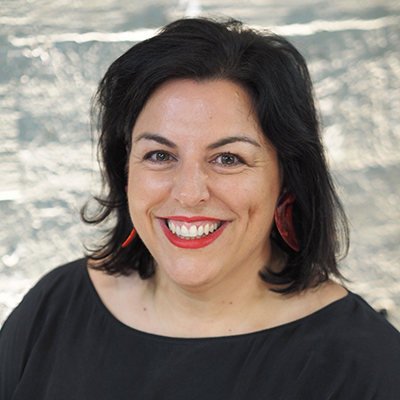
Manual Name : Dr Natalie Galea
Manual Description : Senior Lecturer, Business School
Manual Address :
Manual Addition Info Title :
Manual Addition Info Content :
Profile image : /content/dam/corporate/images/business-school/research/acgeiw/natalie-galea.jpeg
Manual Type : profile
_self
Auto Type : contact
Auto Addition Title :
Auto Addition Content :
Auto Name : true
Auto Position : true
Auto Profile image :
Auto Phone Number : false
Auto Mobile Number : true
Auto Email Address : true
Auto Address : false
UUID :