
What does it mean to build a research career that is accountable to the communities that we work with? How do identity, lived experience, and relationships shape the questions researchers ask, and the methods they choose? For Dr Supriya Subramani, whose work lies at the intersection of health, ethics, and structural injustice, these existential tensions sit alongside theory and practice. In addition to research on migration health and belonging and violence in healthcare, her recent projects within her native South India are grounded in reflexive, community-engaged approaches that challenge the concepts of impact and conventional models of fieldwork.
In conversation, Dr Subramani reflects on her community-engaged research journey, the role of reflexivity in shaping research questions, and the ethical challenges of working across caste, class, race, gender, and migration. Dr Subramani reflects on her journey as an early career researcher on developing trust in relationships, the power of vulnerability, and giving oneself time to explore the questions.
Crafting impact beyond the page
At the heart of Dr Subramani's community-engaged practice and research is the desire to have a true impact on people’s lives – which comes with the big questions on how to achieve that. “I’m asking myself, how do I do this in a way that doesn’t just reinvent the wheel, but adds something meaningful and just?,” she reflects. “How do I avoid writing another abstract, detached piece that doesn’t change anything on the ground? How do I honour the communities who make this work possible? I don’t have all the answers. I’m very much in an existential crisis stage, questioning what matters and what I should do next. But I know that I want my work to be accountable, relational, and meaningful – not just another publication.”
For fellow EMCRs in similar positions, Dr Subramani invites them to “give yourself and your communities time.
Pause. Listen. Learn. Unlearn what you’ve been trained to do automatically. Being productive is not the same as being ethical or meaningful. For EMCRs working in deeply local or marginalised contexts, I would say: don’t be afraid of the word ‘contextual.’ All knowledge is contextual and situated. Our job is to be reflexive about how we frame our questions, whose voices we centre, and which politics we ignore or foreground.
On research and identity
For Dr Subramani, moving into interdisciplinary research was, like for many researchers, a natural progression, and she encourages EMCRs to lead by instinct and opportunity. She landed in bioethics from a background in business management and then from working with communities on youth and empowerment.
“I never planned it in an intentional, linear way. But the longer I stayed, the more it became about critically unpacking: what is this, and how do we do it differently?” she says about her choice of disciplinemovement within research, which was also shaped by her location. “As I moved from one country to another – India, then Switzerland, and now Australia – the borders, histories, and politics of each place pushed me to ask new questions.”
Practising reflexivity has been another key method through Dr Subramani's journey, which is one approach that EMCRs can use to determine where to take their research next according to what is meaningful for them and communities one works with. For those working with community, doing so in an intentional way gives them the power to see beyond the individual. This is what landed Dr Subramani at the research questions that would shape her current work, coupled with a sense to challenge the norms.
She reflects, “The big question I found myself wrestling with was: What does autonomy mean? That eventually led me into a PhD, in the broader space of health ethics and health politics, and questions of patient rights and dignity in a context where oppressive conditions are part of everyday life. Health is just one more institution in that landscape.… I’ve been thinking a lot about how we talk about dignity, especially patient dignity, without looking at larger politics and ideas of freedom. I don’t think we can talk meaningfully about patient rights and dignity if we ignore those things. I’ve also become quite critical of how narrow bioethics can be as a discipline – it often focuses on the doctor–patient relationship as if it exists in a vacuum, without structural context. That’s something I’m constantly trying to push against in my work.”
For researchers working on issues that are central to their own identity, sometimes the distance between their research and their sense of self feels further than it is – until self-reflection better unites the two. When Dr Subramani was doing earlier research, it took her time to claim her identity and its relationship to her research. “Because of my caste identity and the background I come from, I was actively running away from it,” she says. “You’re already experiencing discrimination every day – for example, with a supervisor who knows exactly what your caste is and treats you accordingly – so you end up trying not to talk about it at all. The way I coped was by not naming my identity explicitly in my work. Instead, I looked at class and the subtleties of how caste was playing out through class. That was my way of handling it. The more distance I had from India, though, the more comfortable I became with naming my identity and thinking about who I am.”
Moving from “I” to “we”
Dr Subramani encourages using such revelations of self to further probe the research question, especially when your life is a mirror to your work and larger structural injustice. As your understanding about how your research question has shaped your own life grows, so too can your impact on the community you are researching.
“My work has always been about the questions of ‘everyday indignities’ – how people experience disrespect every day,” says Dr Subramani. “That comes directly from my own experiences. That part of me inevitably seeps into the theorisation in my work. I use health as a lens to show how people experience indignity and disrespect in hospitals, but it also happens in banks, on the street, in public institutions – everywhere. I’m part of what I theorise; my identity is inside the work, even when I wasn’t naming it.
More recently, I’ve been much more intentional about centring my identity. A lot of my methodology is reflexive: I’m constantly unpacking why ‘I’ matters – the significance of ‘I’ and ‘me’ in research. There’s a role my positionality plays in what I see, what I ask, and how I interpret things. Different scholars take this to different depths, but for me, reflexivity is central.
In some disciplines, reflexivity can enable research to acquire a new lens. After moving to the West, “I started experiencing racism more overtly,” she says. “I knew casteism well, but I hadn’t fully integrated that into my academic work the way it deserved. In Zurich, the familiarity of discrimination was there, but in a new form and context. It pushed me to think about caste and race together, and how they intersect in everyday disrespect and indignity.
“I started working with South Asian, African, and Middle Eastern communities there, and that led to my postdoctoral research on health experiences among immigrant women. Again, it wasn’t a simple insider/outsider relationship. In some ways I was part of the ‘we,’ because I’m also a migrant of colour, but I also had different privileges and trajectories. The question ‘who is an insider and who is an outsider?’ is always complicated.”
Working in and with your own community
For those conducting research with their own community, the complexity deepens, especially between the researcher and the subjects. For Dr Subramani, this is especially true when she returns “home” and familiarand complex power dynamics come into play. “Some relatives openly dismiss me: “Oh, you think you know everything now, you’re a professor.”
Many academics are called to research in areas that are personally meaningful or have some connection with their lives. In her time between home and abroad, Dr Subramani has learned to use her own experiences to further her connection to the theories she explores. Growing up in a lower caste community in rural Bangalore, Dr Subramani uses her recollection of indignity and humiliation – something that drives her current research.
“We couldn’t access expensive private hospitals, so if we went anywhere, it was a government hospital,” she says. “These spaces are often treated as ‘freebies for poor people,’ rather than basic entitlements and rights. People act as if poor people don’t deserve quality care, or even basic dignity. There’s a disconnect; they focus on getting through the huge volume of patients but don’t see or treat them as fully human. You can really see how deeply someone can be dehumanised in those spaces.”
The distance has increased both knowledge and tension for Dr Subramani, especially when it comes to integrating the foundation of relationships in her research – essential for anyone working with community. “One of the hardest parts of this work is sustaining meaningful connections with communities when I’m far away,” she reflects. “Anthropologists might do fieldwork for 6 to 12 months and then ‘get the data’ and leave the communities. For me, this feels like a lifelong commitment, not just a discrete project. Building trust and long-term relationships is hard when you’re both ‘one of them’ and ‘foreign’ at the same time.”
Although trust takes effort to build, familiarity brings different challenges. “It’s not just trust with ‘participants,’ it’s trust with people I have long-standing family histories with,” says Dr Subramani. “I know too much about some people’s histories, so I have to be careful not to retraumatise or expose things that would cause harm.”
Above: Dr Subramani helps her aunt cook at her grandmother’s home, where she live and works when she is in South India.
Header: a park where locals sometimes convene and Dr Subramani joins them in conversation.
Owning the vulnerability that arises
The impact of vulnerability – and sharing it herself – has been one of the key lessons for Dr Subramani, and something that needs to be intentionally modulated in different contexts within research.
“Vulnerability, for me, is both resistance and accountability. But it’s also risky. For example, in India, would I want to be vulnerable with a supervisor who has dehumanised me, who treats me badly because of my caste? No, I wouldn’t. I don’t owe vulnerability to people who misuse power over me. At the same time, in recent years I’ve been working on my own self-respect and self-pride, and working with communities that already embrace those ideas. With them, I do want to be vulnerable.”
Sharing experiences becomes a way of connecting and a form of resistance. You share your story, others share theirs, and together you trace how structures shape your lives and how you respond. That collective vulnerability strengthens a broader resistance. That’s why my recent work is about self-respect among women – it’s so important to larger conversations happening in different places.
“In Australia, that might be Indigenous rights and sovereignty. In India, it’s Dalit rights movements, self-respect movements in Ambedkarite and Periyar circles. I see strong connections between these spaces: we are learning from each other’s vulnerabilities in the face of structural injustice.”
With vulnerability comes even deeper considerations of ethics for researchers working with community. “Integrity is at the heart of this,” says Dr Subramani. “I can’t just decide to extract stories and leave. I have to think about the long-term implications, and about advocacy as well as research. For example, there’s no clean water in the village. I want to talk about that, especially in relation to women’s health and chronic pain – my new project – but talking about it academically isn’t enough. I also want to engage health inspectors, local officials, and community leaders so that something might actually change.”
Contributor
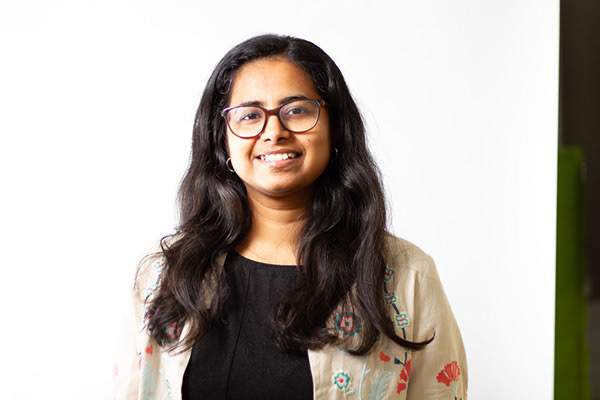
Manual Name : Dr Supriya Subramani
Manual Description : Lecturer in Bioethics, Faculty of Medicine and Health
Manual Address :
Manual Addition Info Title :
Manual Addition Info Content :
Profile image : /content/dam/intranet/images/medicine-and-health/news-and-events/2024/03/supriya-subramani.jpg
Manual Type : profile
_self
Auto Type : contact
Auto Addition Title :
Auto Addition Content :
Auto Name : true
Auto Position : true
Auto Profile image :
Auto Phone Number : false
Auto Mobile Number : true
Auto Email Address : true
Auto Address : false
UUID :