
EMCR networks are shaped by many forms of leadership, and in the case of the Early Career Urban Research Group, one leader in particular. Started by Associate Professor Jennifer Kent from Urban and Regional Planning in the School of Architecture, Design and Planning to connect fellow researchers during COVID lockdowns, the group is has been a space for researchers to meet and learn one from another.
For Associate Professor Kent, the group has always been about connection. It forms experiences for researchers to get together at a critical career stage, when the future is uncertain and they need support from those who understand the most. Here, Associate Professor Kent shares her journey with running the group, with its many rewards and relatable challenges.
Can you tell me a little bit about the background of the group? How did you take part in the organising committee, and when did it start?
It started during the first COVID lockdown, when some of us were just getting together and connecting. At the time, I was on a DECRA fellowship and transitioning to a permanent role. I started to realise that people in that postdoc stage – and I’d been lucky to have fellowships and so forth – were often in this no-man’s land of having to go from contract to contract once they finished their PhD.
So I started to think, how can we better support people? The best thing I could do during COVID, not being someone who was in a position of power myself, was just to get people together and give them a place where they could vent about the different challenges they were facing. It was also about potentially connecting people with other academics around Australia, as a way to branch out their network, but also learn from other academics who had gone through this stage of precarity.
How is the group structured?
It’s a network. We have a monthly one-hour meeting on Tuesday mornings. We also have a weekly writing group, which is a place to connect in between those meeting times.
The membership is a very open, fluid thing that is based on care, and providing that to anybody who needs it at the time.
How many EMCRs, are supported by your group?
I can only really go by who’s on the mailing list. I would say about 35 or so. It fluctuates as people come and go, and participation in the sessions fluctuates as well. A lot of people are doing sessional teaching and that kind of thing.
How do you decide which initiatives to run for EMCRs? Do you have a topic or theme each month?
We have a theme every month, and that’s curated mostly by me. But I always ask people to suggest things, and quite often that happens. A recent suggestion was about “snack writing”, and the idea of doing bits and pieces of writing in between different tasks, so the next session is going to be on that.
I’ve collected a few resources and things that people might find useful, but mainly I’ll be getting people to talk about their experience with writing – what they’ve found successful, what they haven’t found successful, and so forth. A lot of it is about acknowledging how hard it is. It’s about giving people that validation that what they’re doing is tough, and writing is hard.
What else are you going to be running in 2026, and what are some of the main goals or focus areas?
One planned session is on making the best of conferences: things you can think about in terms of networking, establishing who you want to influence, and why you want to go to the conference. Each topic is never about our actual research. It’s always about how to do research and position yourself for success.
The writing group is weekly. It’s been one of the most successful things. There’s huge demand for it. Not that we get overwhelmed by people, but there are a few people who will always show up, no matter what. We basically check in at the beginning, say what we’re writing, what we’re working on, and what we’re hoping to achieve in the next two hours. Then we turn cameras off, turn sound off, and just sit and do it. Five minutes before the end, we check back in and say what we did and what we didn’t do. For many people, it’s really effective. We’ve had different things where we’ve committed to a two-paper challenge and used that time to write those papers. Other people have told me they’ve written book chapters and other things because of that writing group. It’s given them the time to be able to do that.
What other kinds of activities or events have worked best for your members?
There was the carers group, which I should probably reconvene. That was a lot of fun. A lot of us had kids aged between three and six, and we’d meet in a park and the kids would just play. My little boy is friends with a lot of these people’s kids because of this. That was more social. It was for carers of dogs as well, so we had quite a few ECUR dogs. We met a few times in Newtown Park, and a few times in a park in Croydon, which was central to all of us.
We also have the usual end-of-year drinks, where we’ll go to a pub and have a drink. And we’ve had celebratory events. For example, when somebody got permanent residency, everyone came over to my place and we celebrated that. There was another person who graduated from their PhD after eight years or something, so we celebrated that.
Theme | Guest |
Strategic Planning Afternoon |
|
Diplomacy in collaborations | Adrienne Keane (USYD) |
DECRA applications | Amandeep Kaur (USYD) Sophia Maalsen (USYD) |
Stepping up, moving on and being a long way from home | Arianna Brambilla (USYD) |
Doing a DECRA in your own time | Ben Beck (Monash) |
Collaboration masterclass | Carey Curtis (UniMelb) |
What I look for in a lecturer… | Chris Gibson (Wollongong) |
Policy Analysis Masterclass | Crystal Legacy (UniMelb) |
Peer Reviewing | Dallas Rogers (USYD) |
Getting a foot in the door | Donald McNeill |
Making an international move | Eugenia Gasparri (USYD) |
Saying no, leveraging off other projects and managing time | Hazel Easthope (UNSW) |
Professional staff – what I wish academics knew | Jennifer Ryan, Katie Murray and Kim Mannering |
Library tips – using the resource | JohnPaul Cenzato (USYD) |
Work life balance | Julien Pollack (USYD) |
Teams, delegating and using RAs wisely | Kristian Ruming (MQ) |
Postdoc to PhD to Continuing Position | Laura Crommelin (UNSW) Jiawen Han (Xi'an Jiaotong-Liverpool University) Megan Nethercote (RMIT) Liz Taylor (RMIT) |
What I wish I'd known way back when.... | Libby Porter (RMIT) |
Breaking the bias | Melinda Gaughwin (USYD) Deb Young (USYD) |
The benefits of combining teaching and research | Nancy Marshall (USYD) |
Planning your time off so you can take time off | Nicole Gurran |
Taking your research from local to global | Paul Jones (USYD) |
Publishing Masterclass: how to maximise your chances | Pauline McGuirk (UOW) |
Gender, work and "relative to opportunity" | Rae Cooper (USYD) |
Writing, academia and life | Rae Dufty-Jones (WSU) |
Family, relationships and academic careers | Robyn Dowling (USYD) |
Pathways post PhD and postdoc: What now? | Tim Tompson Anumitra Mirti |
How to prioritise commitments as a postdoc | Tooran Alizadeh |
What has worked best for encouraging members to attend events?
There’s the basic stuff, like having really good guests. I’ve reached out to academics all around Australia, and when I line somebody up that I know people will be interested in talking to, that generates interest. But to be honest, I think it’s just the consistency – that it’s there for when people need it. People don’t always need that support. But the fact that it’s there, and people can rely on it, is what works.
That might mean you have to endure fluctuations in engagement, and I’ve done that. But the fact that I’ve just kept going with it, I think that’s what really makes it successful. That determination.
They all have calendar invites for the monthly catch-up and the writing group. Then it’s just emails. But that email list is important. I use it to say, “Here’s a job,” or “There’s an opportunity,” and other people will also say, “I’ve heard about this job,” or “There’s this fellowship available.” It comes back to the idea of the group treading this space between formalised structures and a really organic, safe space that doesn’t take effort. It’s there if you need it.
It’s also all online. I feel like that’s an important equity component as well.
How do you keep members engaged between events?
It’s all just that email group and chatting back and forth.
Do you have any out-of-the-box ideas that worked well, which you didn’t think would?
I didn’t think the whole thing would work!
A few years ago, I got in touch with the ABC podcast This Working Life. They were doing a piece on imposter syndrome, and they interviewed me about imposter syndrome in academia. I asked them to feature ECUR and imposter syndrome. It wasn’t anything huge, but we had a photo of us power posing and things like that. I didn’t think that would take off, but it was fun, because people could see themselves recognised.
Annually, we do a strategic planning afternoon. We all sit down and go through the steps of doing a strategic plan for our year – not for ECUR, but for ourselves, like an individual strategic plan. That’s successful. It’s the one thing we do in person. Usually, I’ll book a room somewhere on campus, and people bake muffins and things like that. We sit there and go through this strategic planning exercise. We report back on that midway through the year and at the end of the year.
What has been the best outcome or impact from meeting regularly with your group?
I think it’s the fact that many of the original members – the ones who really needed a hug, basically, needed someone to care – many of them have now gone on to have continuing academic positions, not necessarily at Sydney, but at other universities.
It’s kind of like being a mum. You have to let your babies go, and that makes me really proud – that I was able to foster them through that journey of precarity and say to them, “You’re going to get through this. This is just a stage in the career, and it’s normal.” Now they’re continuing academics. I feel as though at least a handful of them probably would have given up if they didn’t have a sense of support and camaraderie. I’m not saying ECUR was all of that, but I think it was part of it.
Based on your experience, what advice do you have for other EMCR networks?
There are two things. The first is persevere. Push through your own imposter syndrome and keep showing up. Just keep showing up. It might take a bit of time for things to really take off.
The second thing is: listen. Not necessarily even to what people are saying, but to their being. Really listen out for what people in your group need and want. Not necessarily by just asking them that, but by taking stock, putting yourself in their shoes, and trying to respond to that, rather than doing a top-down, “This is what I think you need.”
More on our EMCR networks
Contributor
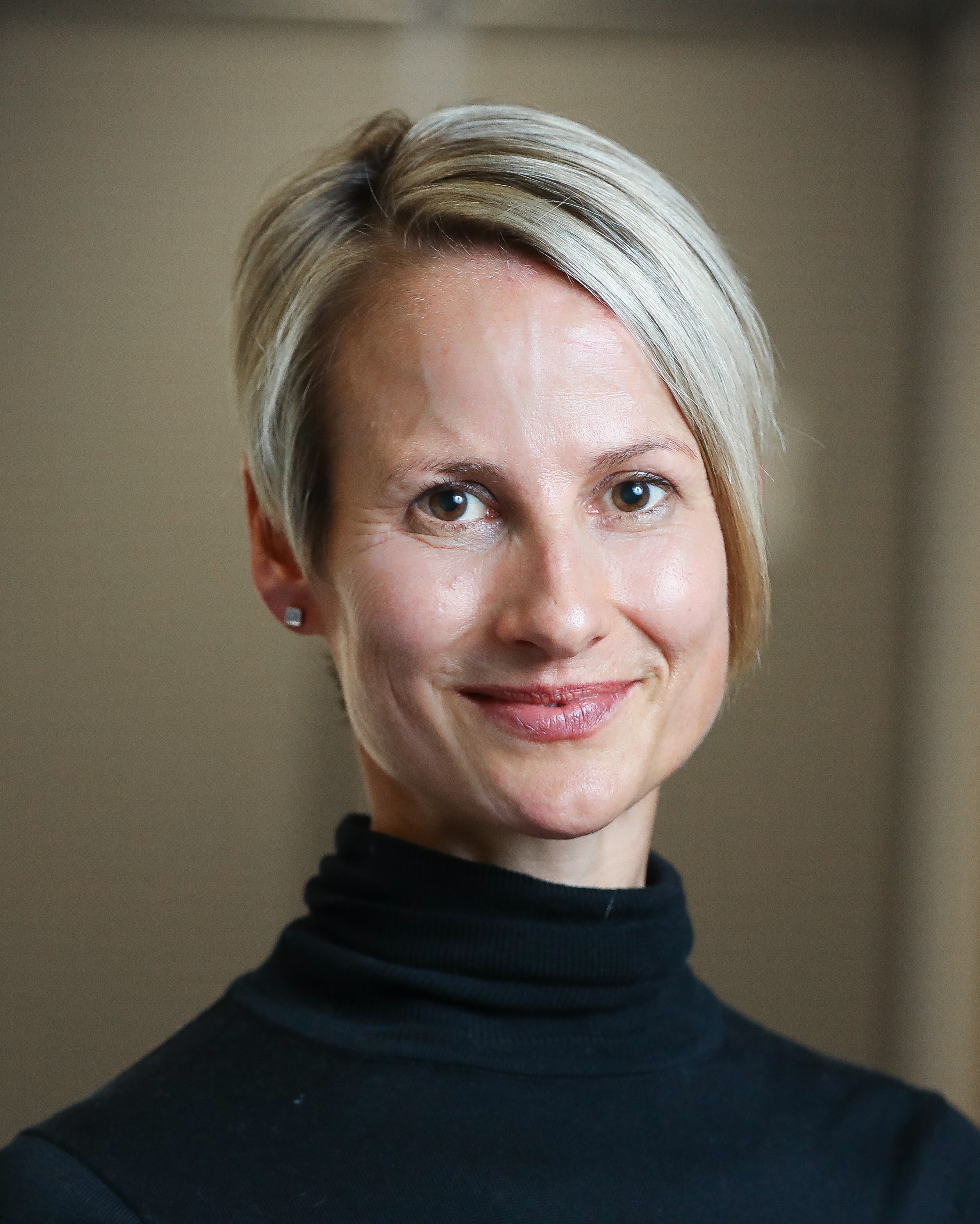
Manual Name : Associate Professor Jennifer Kent
Manual Description : Robinson Fellow, Sydney School of Architecture, Design and Planning
Manual Address :
Manual Addition Info Title :
Manual Addition Info Content :
Profile image : /content/dam/faculty-and-school-restricted-use-images/sydney-school-of-architecture-design-and-planning/jennifer-kent.jpg
Manual Type : profile
_self
Auto Type : contact
Auto Addition Title :
Auto Addition Content :
Auto Name : true
Auto Position : true
Auto Profile image :
Auto Phone Number : false
Auto Mobile Number : true
Auto Email Address : true
Auto Address : false
UUID :