
Complex social problems like domestic and family violence cannot be addressed through a single discipline alone. They demand collaboration across different fields, methodologies and perspectives, which is something Associate Professor Helen Paterson has been tackling through her research on victim-survivor testimony that won the 2026 Eureka Prize in Forensic Science. Associate Professor Paterson works with researchers from psychology, law and medicine alongside stakeholders from the police and legal system to effect change in the way courts understand memory from people who have experienced patterns of repeated abuse.
Originally a laboratory-based scientist, she had what she calls a “crisis of relevance’ when she saw the numbers of domestic and family violence survivors rise during COVID and became driven to apply her research more directly to survivor outcomes. It was then that she decided to reach beyond her field – and forged the connections that would inform her work in the process.
If you can’t find it, create it
Fresh out of lockdown, Associate Professor Paterson hosted a conference on domestic and family violence at the University. “I had previously been to a conference on domestic and family violence, and it was really expensive to go to,” she says. “I thought that this is not great for these organisations that are operating on a shoestring, and for people with lived experience who can't afford to go.”
She recognised that she had access to unused lecture theatres during semester breaks, and as Deputy Chair of the Sydney Institute of Criminology within the Faculty of Law, she was able to get some funding to make the conference happen. Her vision was simple: “I would start to collaborate with these people, and I could do research that was more applied, rather than just using these experimental studies with undergraduate participants,” she says. She invited everyone who was working in the field or had lived experience to attend. “That was my goal: to get the researchers and practitioners talking to one another more, to ensure that the research we're doing is important and relevant within their fields.”
Many methods share a common purpose
The first conference brought a diverse mix of people from across the sector, which was exactly the point. “We had historians presenting, people working at refuges, clinical psychologists and experimental researchers,” Associate Professor Paterson says. “In some ways, that was fantastic to hear all the different perspectives, because it's such a complex problem. You can't look at it any one way.”
However, the experience also brought up the misunderstandings that can exist amidst differing disciplines, and the need to approach one another with openness and curiosity. “There were some people thinking that their methodology was better than other peoples, and saying, ‘How is that even relevant?’” she reflects.
What I got from that is that every way of approaching this problem has its strengths and limitations, and we need to work from all different angles and all different perspectives. Together, we can create knowledge that will really help.
For Associate Professor Paterson, she took the disagreements as a lesson in framing. “The next time I hosted the conference, I said at the beginning, ‘We're all here for the same reasons. We want to end domestic and family violence.’” Providing a shared purpose enables people from differing perspectives to have constructive conversations rather than competing over whose work is more important. It also provides a platform to invite distinct stakeholders.
“Some people focus on perpetrators, some people focus on victims,” says Associate Professor Paterson. “Some people didn't want police to be there because they perceived police to be part of the problem. I said they should be there because they're going to have to be part of the solution too.”
Extend your invitations for the greatest impact
Inviting community members working on domestic violence has allowed the research to extend past the institution and into the minds of those who can apply it to their practice. Some of those invitees have even developed into true collaborators.
“Through the conference, I met a police prosecutor, Corey Wolvin, who came up to me and said, ‘I'm interested in the work you do,’” recalls Associate Professor Paterson. “Now he's doing a master's with me. He's still a police prosecutor, and he has access to data through the police force, looking at real transcripts of victim-survivors. We can see whether some of these things that we see in the laboratory setting are also true in the real world. That's what his research is about to do, which is fantastic, because it increases the ecological validity of these studies. It's been an important benefit from that conference.”
Associate Professor Paterson ensures her research papers are open access and accessible to outside partners who can use the findings to make a difference. When she works directly with these stakeholders, she uses the same communication principles. “Ultimately, my preference for research is very applied,” she says. "I don't want to come up with solutions for their problems if they say, ‘Actually, those aren't practical, we can't implement that.’"
It's about discussing with them what their circumstances are, getting a better understanding of what they see a solution could be, and then we can start testing that and looking into that.
By engaging in the conversation about domestic and family violence, Associate Professor Paterson’s network has also expanded at the University of Sydney home front. “I was invited to a meeting to give my advice to professional staff workers who were working on the prevention and response policy for gender-based violence in the university setting,” she reflects. “When we got there, there were a number of experts in the field, and we had never met each other. We also realised that there were other people who should have been in that room who they didn't know to invite.
“Because of that, I've started to put together a network of people who are working in this space across the University, and we've started to have regular meetings so we know what type of research is happening, and hopefully this will increase the collaborations.” The network, known as the Sydney Network for Collaboration on Domestic, Family and Sexual Violence (SYNC-DFSV), brings together almost 60 academics, professional staff, and HDR students from across the University who are working to address domestic, family, and sexual violence through research, education, policy, and practice. The network received funding from the DVC Culture and Leadership Seed and Scale Grant.
By extending her network, Associate Professor Paterson has found collaborators who complement her own skills, rather than offer the same approach. “There are certain things that I'm good at, certain things that I'm not so good at,” she says. “While it might be harder at first when you start collaborating with people from different disciplines, it can be so much better in the long run, because we have these blind spots when we're used to doing research one particular way. That can really help to give you a broader perspective of things.”
Discuss how you want to work
For any research team, communication is critical. Setting ground rules shapes the way the project will move forward and sets boundaries and expectations.
For her current research examining the justice experiences of victim-survivors of domestic and family violence, the team, led by Professor Rita Shackel and comprising collaborators from Law, FASS, FMH, and Science, worked to develop a governance and wellbeing framework, including clear guidelines for how the team would collaborate throughout the project.
“That went through ethics as well, because we wanted to ensure that people felt safe within our research team,” says Associate Professor Paterson. “We knew that we'd be dealing with some potentially quite distressing content, so we wanted to ensure that we felt safe with each other but also knew how to get help if that was needed. We had guardrails in place to help people if they started struggling with this content matter.”
Their chosen methodologies for the project evolved through the process of co-design, which involved participants with lived experience of domestic and family violence. “When we first started to meet, we all came to the meeting with different ideas of how the research would be conducted,” says Associate Professor Paterson. “It was a little bit tricky at first because we had different methodologies in mind, different ways of speaking, different vocabulary that we used. But then we got through that initial phase and started listening to each other and understanding one another's expertise.”
The differing approaches all found their way into the project, each offering a unique angle on the research. It turned out those with lived experience were as diverse as the research team itself. “We went to them and said, ‘What do you think are the preferred methodologies? How should we do this?’”, reflects Associate Professor Paterson. “Some said they wanted surveys, some said yarning groups, some said circles, some said focus groups. We thought, we want to capture all sorts of different people, so we'll offer different methodologies. We'll ask similar questions through these different methodologies, and then victim-survivors can come forward and contribute in the way they feel most comfortable with. That was helpful, to be very inclusive of all these different ideas.”
To become an effective collaborator, Associate Professor advises sitting with yourself to understand how you work best first. “By now I know what strengths I have and can bring to a collaboration, and I'm also very upfront about my limitations,” she says. “It's better to be upfront about that. These are my limitations in terms of my understanding of experimental methodologies and so forth, but also not just your knowledge of the domain. It's how you work well and how you don't.”
Keep your networks alive
Starting a conference is one way to grow your network, but Associate Professor Paterson insists that every EMCR has the potential to develop connections with those around them. “I've had a great group of friends and colleagues, and over the years I look around and I've gotten older and more experienced, and so have they,” she says. “Suddenly I know all these people who are in important places, because we've all progressed in our careers together.”
The most important thing, she says, is being in the room. “It's important to be in the room, go to different events, and be consistent about meeting people. It's very rare that a one-off meeting will lead to a collaboration. It's about starting that connection and maintaining it over time. Sometimes, as you get to know them better, you realise, ‘I can trust this person,’ because working together requires a lot of trust. You want to pick wisely.”
With time, the connections can develop into the kind of research projects that truly makes a difference beyond the lab.
Watch for more advice on finding collaborations
URL
embed-3ff0c6bd49
More on collaboration
Contributor
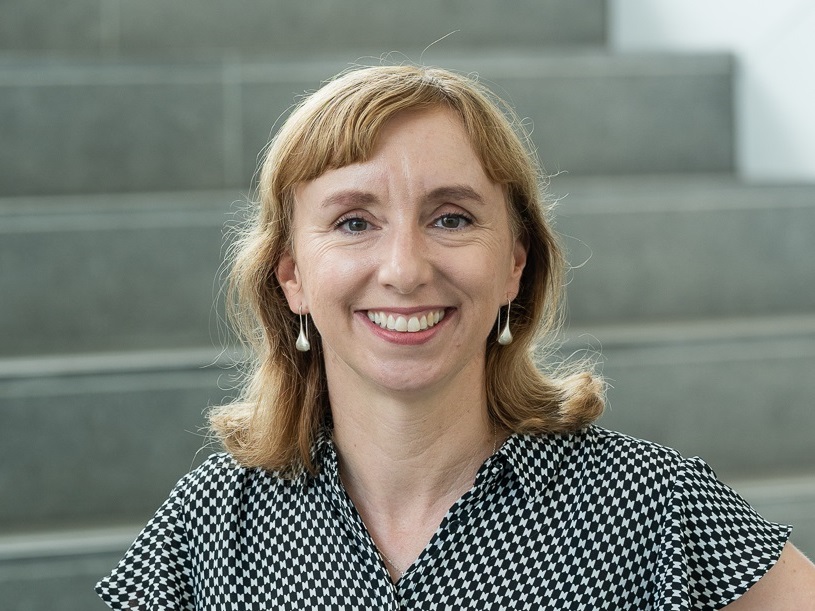
Manual Name : Associate Professor Helen Paterson
Manual Description : Associate Dean (Community & Culture), Faculty of Science
Manual Address :
Manual Addition Info Title :
Manual Addition Info Content :
Profile image : /content/dam/intranet/images/employment/diversity-and-inclusion/gender-equity/sage/helen-paterson.jpg
Manual Type : profile
_self
Auto Type : contact
Auto Addition Title :
Auto Addition Content :
Auto Name : true
Auto Position : true
Auto Profile image :
Auto Phone Number : false
Auto Mobile Number : true
Auto Email Address : true
Auto Address : false
UUID :